
Trump on Iran
The ideal message for President Trump to send to Iran at this stage?

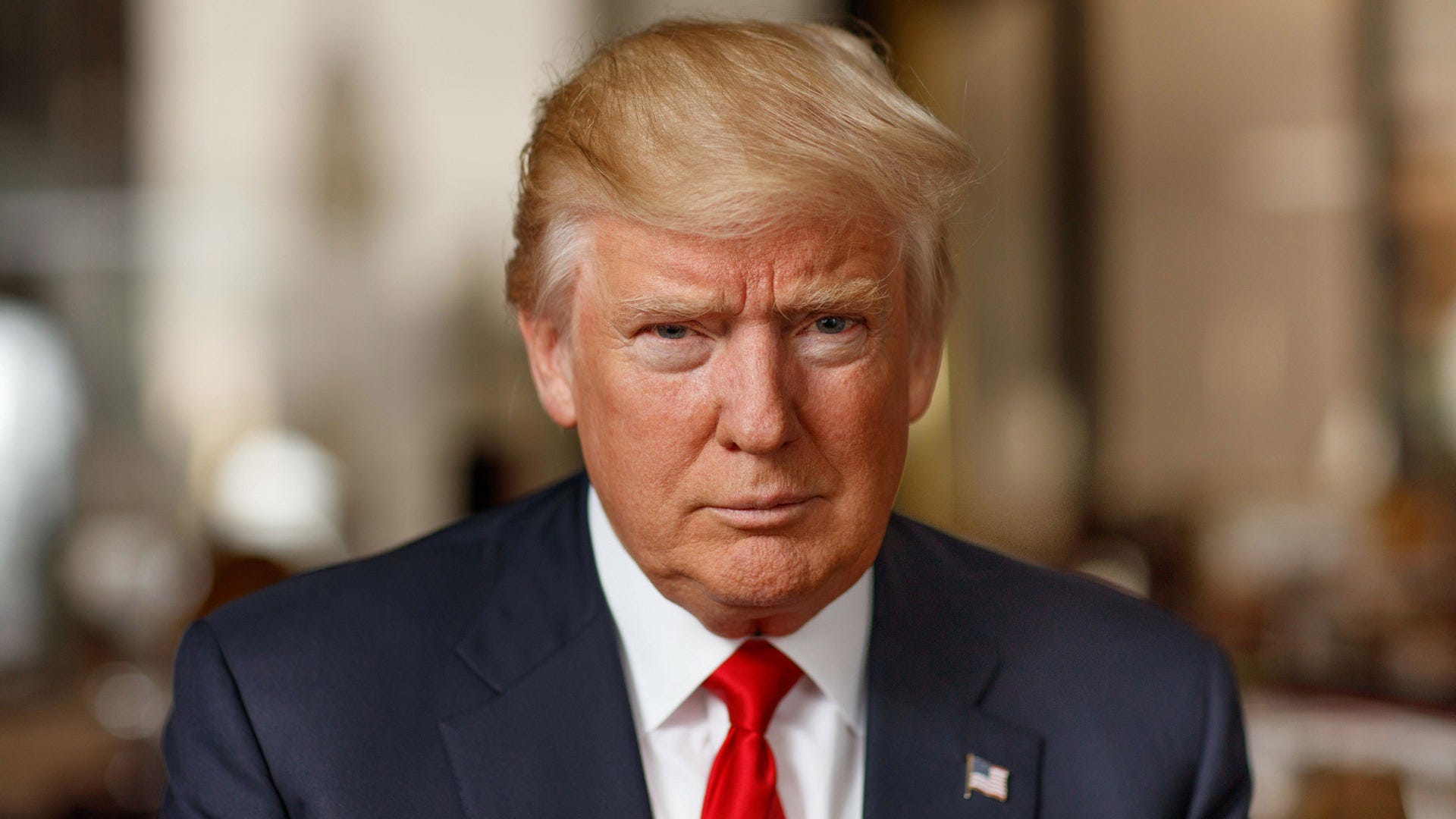
When I first embarked on this war with our partners, Israel, our first intention was to rid Iran of any future possible nuclear capabilities or ambitions, seriously degrade its missile and military structure and remove its current leaders. All of which has been achieved. Its leadership, Air-force and Navy are in tatters and its missile capability 80-90% degraded. US and Israeli planes may fly over Iran air-space at will and bomb unimpeded.
As part of this, it was also seen as desirable if on the back of this degrading and weakening of the current regime, the Iranian people rose up and pushed for a new regime. However, having seen Iran’s retaliation of hitting out at neighbouring Gulf States and blocking the Strait of Hormuz, that desire moves to an absolute necessity. A regime that holds the rest of the world to ransom over shipping and oil trade cannot remain in place.
If the regime cannot be removed or replaced in total, then two options remain. Kharg Island, a main transit point for much of Iran’s oil and gas exports, will be taken over. In addition, a coastline stretch 80 miles each side of the apex point of the Strait of Hormuz and going 30 miles inland will be taken over by US, Israeli and international forces and permanently annexed – so that the Strait of Hormuz is once again returned to a protected international waterway, as it should be.
On the aforementioned attack by Iran on Gulf neighbours, while this was a shock to those neighbours – many of whom in fact acted as honest brokers in trying to reach a peace accord and avoid conflict – I should offer my thanks to the Iranian regime. Their actions have shown clearly to these Gulf nations that Iran poses by far the largest threat to them and, in so doing, has pushed them further into accord with the USA and Israel. Through this, Iran has done more to help further the Abraham Accords between Israel and Arab nations than I have achieved in the past decade of negotiations. Thank you.
Belligerent responses by Iran to the current 15-point peace offer on the table that they either reject those offers, find them too ‘excessive’ or that the war will only be ended on ‘Iran’s terms and at a time of their choosing’, are not helpful. This simply immediately removes from the table any offer of a cease fire while negotiations are taking place. Because, of course, we are not going to hold fire against an enemy who show no intentions or desire to make peace.
And as for claims of ‘who is winning’, while we have removed much of your prime leadership, Air-force, Navy and missile capability, while in turn you have made hardly a dent in ours or that of Israel – there remains little doubt. All you have done is aim at softer civilian targets in Israel and surrounding Gulf nations with limited success; the latter, as said, merely alienating those Gulf nations against you and pushing them further and stronger into the ‘Abraham Accords’ embrace. And as for your curtailing shipping passage in the Strait of Hormuz, as said, this is only a temporary measure and will cease as soon as we take over Kharg Island and annexe a ‘protection zone’ around the Strait of Hormuz. Your missile and drone capability will also be further eroded as the war continues, until it is negligible or virtually nil.
It appears you are putting your regime survival before the welfare of your own people, which will simply further alienate much of the Iranian populous against you. As it is, estimates of internal support for your regime are only 20%, at best 40%, so trying to maintain control of a population which is anything from 60-80% against you is by no means a long-term solution. If they do not rise up against you in the immediate wake of this war, then they likely will in the months that follow. You would be hard-pushed to last a year. And trying to stem that flow against you by brutal oppression and mass killing will just harden that wave of opposition and uprising against you, with the only option then a complete overthrow of your regime.
But, mindful of the fact that you still have support in the nation for a religious-led doctrine, as said, at best 40%, but more likely only 20% - even though they might be particularly visible and vocal on the streets, thereby misleading margins – this then raises concerns in my mind that a complete transition to a fresh government might entail heavy civil unrest, verging on a war, in the process.
To avoid this, along with war-forced moves by us to annexe and control key regions of Iran, I am going to make the offer, in addition to my 15-point plan, that the current regime enter into a coalition partnership with the son of the past Shah, Reza Pahlavi. Through this, all parties will be represented: those wishing to retain a theology-led regime and those wishing to lean towards freedom and a more Westernized-style government. With, of course, a number of more flexible and reasonable laws to reflect this transition. This then avoids ‘heavy-swing’ politics where one side feel they are not represented at all; indeed, both sides will be equally represented.
I know that in response to my current 15-point peace plan, there have been calls from Iran for ‘war reparations’. Given a maintaining of the current regime situation, we would oppose this request. But if there was a move towards my aforesaid ‘coalition government’ suggestion, we would be open to it, in the same way that the USA was open to helping re-build West Germany under the ‘Marshall Plan’ after WW2. Because at that stage we would view Iran more as a friend of the West and therefore open to trade and investment back and forth. I also feel this arrangement would do much to repair the damage caused by you bombing your Gulf neighbours and would hopefully allay their future fears. As well as helping rebuild the future finances and prospects of Iran to benefit its people.
Thank you for your attention in this matter.
******
John Matthews - Notes from the Edge. If you like my articles and wish to receive them regularly - I look forward to getting your subscription.
******
John Matthews is an experienced writer and journalist. The author of 24 books, including two centred around WW2 and the holocaust in the name of J.C. Maetis (his father’s original Jewish name) his first experience of writing about the Middle East came as a war correspondent covering the last years of the Lebanese Civil War, which led to his second book, ‘The Crescents of the Moon’. He has since written on the subject for a number of journals, including The Times, Sunday Times, Newsweek, The Independent and The Spectator. He was also in the run-up to the millennium editor of European Brief, the main magazine for the European Parliament, editing the likes of Tony Blair, Al Gore and Henry Kissinger on subjects ranging from the fall of the Berlin Wall and European unity, climate change and nuclear fusion to, once again, the Middle East. He lives in London with his wife and family.
******
Well said and very much logical..
I may be wrong, but I strongly suspect that both the Strait of Hormuz and Kharg Island were on the strategic drawing board from day one. Any serious military planning begins with a simple question: what leverage does the adversary have? In Iran’s case, that obviously includes missiles, drones, and its ability to disrupt global oil through the Strait of Hormuz. It’s hard to imagine that U.S. and Israeli planners didn’t factor this in from the start. Trump’s pattern has been consistent — talk, offer negotiations, give the other side chances, and then act decisively. When thousands of Marines and naval assets are moving into the region, they are not there symbolically. My sense is that this has all been anticipated, and that controlling those choke points is likely part of the endgame.